If you’ve ever stood in the grocery aisle staring at a jar of golden honey and wondered, “Is honey good for health, or is it just sugar in a fancier bottle?” — you’re not alone. It’s one of the most searched questions in the wellness world, and for good reason. Honey has been used for thousands of years, not just as a sweetener but as a form of medicine, a skincare secret, and a kitchen staple passed down through generations.
But does the science actually back up the hype? Or has honey simply ridden the wave of “natural is always better” marketing?
In this article, we’re going to dig deep — past the Pinterest quotes and grandma’s remedies — into what honey actually does inside your body, what it can do for your skin, when it might not be the healthiest choice, and how to actually use it to get real benefits. By the end, you’ll know exactly where honey fits into a healthy lifestyle, and where it doesn’t.
Let’s get into it.
What Exactly Is Honey?
Honey is a thick, golden liquid made by honeybees from the nectar of flowers. Worker bees collect nectar, break down its complex sugars using enzymes in their bodies, and then store it in the honeycomb, where water evaporates and it thickens into the honey we recognize.
What makes honey nutritionally interesting isn’t just its sugar content — it’s everything else that comes along for the ride: trace enzymes, antioxidants, amino acids, vitamins, and minerals. This is what separates raw, minimally processed honey from the heavily filtered, pasteurized honey bears you often find on supermarket shelves.
And that distinction matters more than most people realize. The “is honey good for health” debate often gets muddled because people are comparing two very different products: raw honey versus heavily processed commercial honey.
The Nutritional Profile of Honey
Before we talk about benefits, let’s ground this in facts. One tablespoon (about 21 grams) of honey typically contains:
- Roughly 64 calories
- About 17 grams of sugar (mainly fructose and glucose)
- Trace amounts of vitamin C, calcium, iron, and potassium
- Small quantities of antioxidants called flavonoids and phenolic acids
- Naturally occurring enzymes like glucose oxidase, which contributes to honey’s antibacterial properties
At first glance, that sugar number might make you pause. And it’s a fair concern — we’ll address it honestly later in this article. But what makes honey different from refined table sugar is the surrounding nutrient and antioxidant matrix, which appears to soften some of sugar’s more harmful metabolic effects when honey is used in moderation.
So, Is Honey Good for Health? Here’s What the Research Says
Let’s break this down benefit by benefit, because “good for health” is a broad claim, and honey doesn’t affect every part of the body the same way.
1. Honey Is Rich in Antioxidants
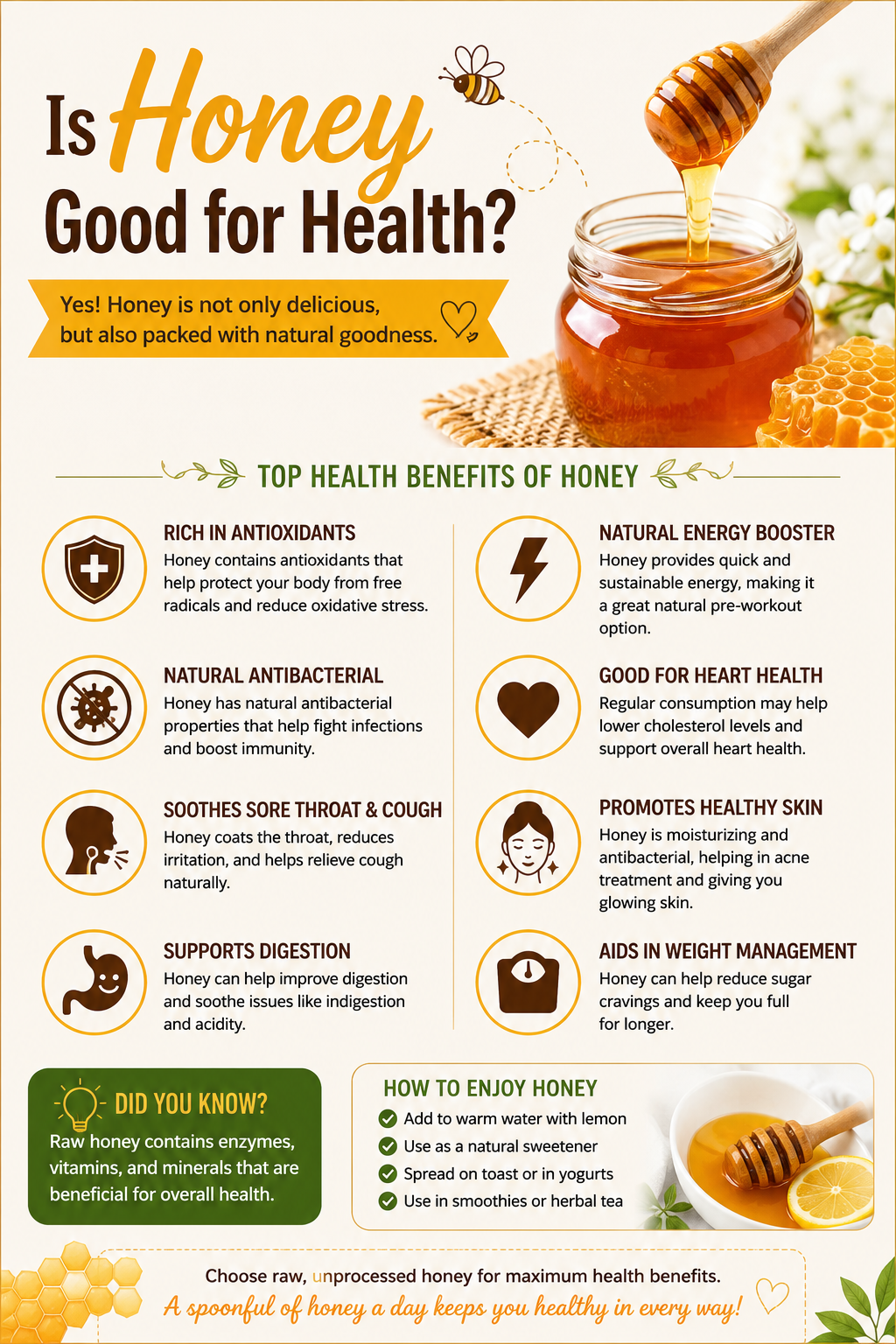
One of the most well-documented benefits of honey is its antioxidant content. Darker honeys — like buckwheat or manuka honey — tend to contain higher levels of polyphenols and flavonoids, plant compounds known to fight oxidative stress in the body.
Oxidative stress is linked to aging, inflammation, and chronic diseases like heart disease and certain cancers. While honey alone won’t reverse or prevent these conditions, incorporating antioxidant-rich foods like raw honey into your diet is a small, tasty step toward reducing overall oxidative burden.
2. Natural Antibacterial and Wound-Healing Properties
This is where honey genuinely earns its “medicinal” reputation. Honey — particularly Manuka honey from New Zealand — has documented antibacterial properties. It works through a few mechanisms:
- Low water content creates an environment where bacteria struggle to survive.
- Hydrogen peroxide production, a byproduct of the enzyme glucose oxidase, has mild antiseptic effects.
- Acidity (honey typically has a pH between 3.2 and 4.5) further inhibits bacterial growth.
Medical-grade honey is actually used in some wound-care settings, applied topically to minor wounds and burns to support healing and reduce infection risk. That said, this refers specifically to sterilized, medical-grade honey — not the honey in your pantry. If you’re dealing with a wound that needs care, always consult a healthcare professional rather than self-treating.
3. Soothing Coughs and Sore Throats
If there’s one honey benefit almost everyone has personally experienced, it’s this one. Honey has long been used as a home remedy for coughs, and modern research actually supports it.
Studies comparing honey to over-the-counter cough suppressants have found that honey can be just as effective — sometimes more so — at reducing nighttime cough frequency and severity, particularly in children over the age of one (never give honey to infants under 12 months; more on that shortly).
The thick, syrupy texture coats the throat, reducing irritation, while its mild antibacterial properties may help address any underlying bacterial component.
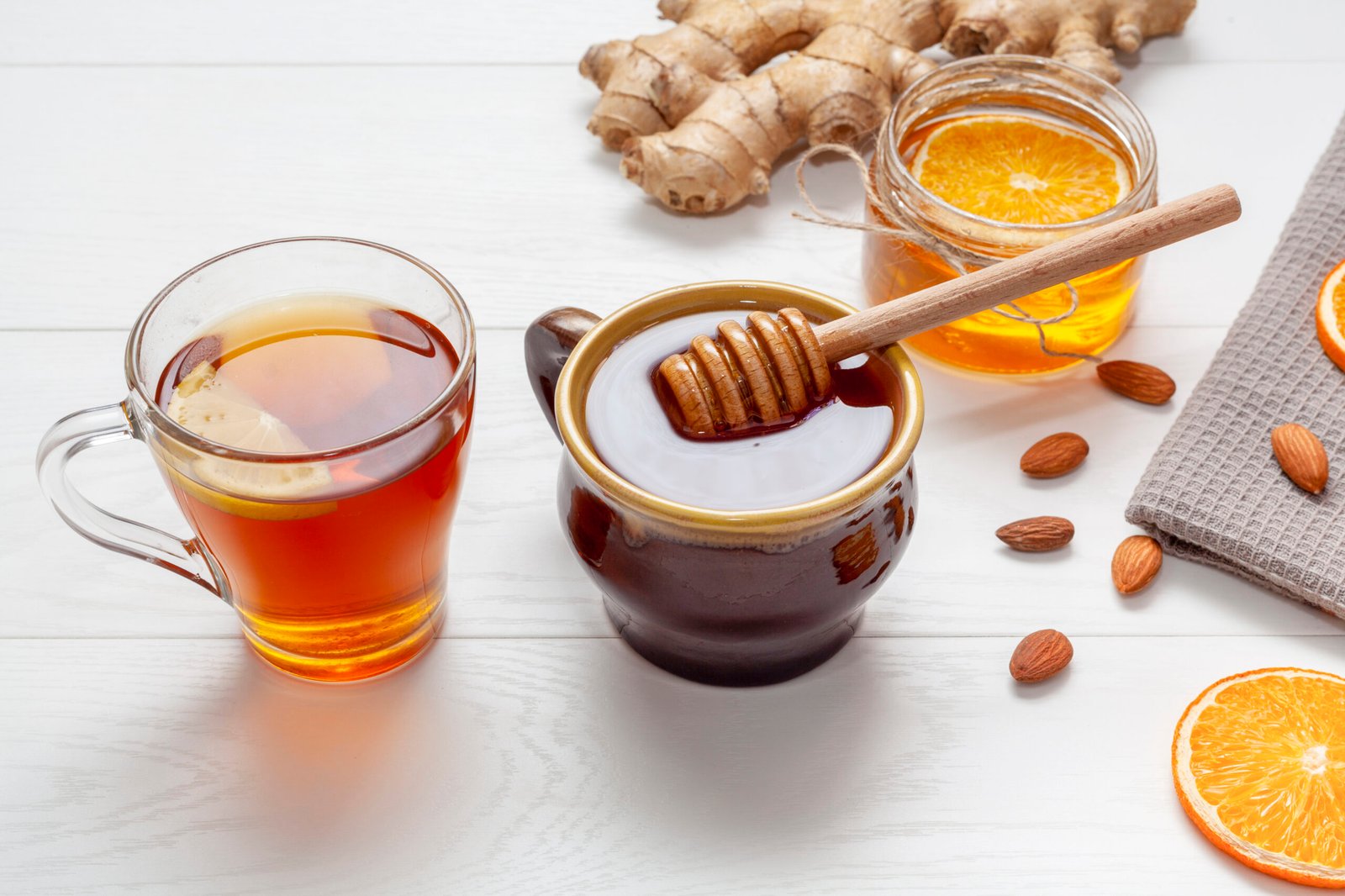
A simple honey remedy: Mix one to two teaspoons of raw honey into warm water or herbal tea with a squeeze of lemon. Sip slowly.
4. Supports Digestive Health
Honey has a long-standing reputation as a digestive aid, and there’s some real substance behind it. It contains prebiotic compounds that may help feed the beneficial bacteria living in your gut, potentially supporting a healthier microbiome over time.
Some people also use honey to soothe mild digestive discomfort, and there’s preliminary evidence suggesting honey may help manage symptoms of mild diarrhea by supporting rehydration and reducing the duration of certain infections. However, honey is not a substitute for medical treatment for serious digestive issues, and anyone with persistent digestive problems should see a doctor.
5. May Support Heart Health
Emerging research suggests that honey — when used as a replacement for refined sugar rather than in addition to it — may have a modestly positive effect on heart health markers. Some studies have linked regular, moderate honey consumption to:
- Slightly reduced LDL (“bad”) cholesterol
- Modest improvements in triglyceride levels
- Mild reductions in blood pressure
The key word throughout this research is modest. Honey isn’t a heart-health miracle cure, but as part of an overall balanced diet — and specifically when it replaces refined sugar rather than adding to your total sugar intake — it may offer a small cardiovascular advantage.
6. A Natural Energy Source
Athletes and active individuals have used honey for decades as a natural, fast-digesting source of carbohydrates. Because it contains a blend of glucose and fructose, honey can provide a relatively quick energy boost, which is why you’ll sometimes see it used in homemade energy gels or pre-workout snacks.
Unlike refined sugar, it comes with a small nutritional bonus of trace minerals and antioxidants — so if you need quick carbohydrates before a workout, honey is a reasonable natural option compared to candy or sugary sports drinks.
7. Honey and Allergies: What the Evidence Really Shows
You’ve probably heard the claim that eating local, raw honey can help build immunity to seasonal pollen allergies. It’s a lovely idea — and unfortunately, the science doesn’t strongly support it.
The theory is that trace amounts of local pollen in honey act like a mini allergy shot, gradually desensitizing your immune system. In reality, most of the pollen that triggers seasonal allergies (like ragweed) is wind-pollinated, not the flower pollen that bees typically collect. Clinical studies specifically testing honey against seasonal allergies have generally not found statistically significant benefits over a placebo.
That doesn’t mean honey isn’t worth eating — it just means you probably shouldn’t rely on it as your allergy treatment plan.
Is Honey Good for Skin? Beauty Benefits Worth Knowing
Since this is a health and beauty blog, let’s talk about honey’s other life — as a skincare staple.
Natural Humectant
Honey is a humectant, meaning it draws moisture from the air into your skin. This makes it a popular natural ingredient in moisturizers, masks, and lip treatments, helping skin feel hydrated and supple.
Gentle Antibacterial Properties for Acne-Prone Skin
Thanks to the same antibacterial mechanisms mentioned earlier, honey is sometimes used in DIY face masks to help calm breakouts and soothe irritated skin. Raw honey applied topically may help reduce the presence of acne-causing bacteria, though it works best as a complementary step rather than a replacement for a full skincare routine.
Simple Honey Face Mask
- 1 tablespoon raw honey
- Optional: a few drops of lemon juice or a teaspoon of plain yogurt
Apply to clean skin, leave for 10–15 minutes, then rinse with lukewarm water. Always patch-test first, since honey can occasionally trigger sensitivity in those with pollen allergies.
Soothing for Dry Lips and Minor Skin Irritation
Because of its moisture-retaining and mildly antiseptic properties, a dab of raw honey can help soothe chapped lips or minor superficial skin irritation.
Different Types of Honey — Does It Matter Which One You Buy?
Not all honey is created equal, and this matters a lot when answering “is honey good for health.”
| Type of Honey | Key Characteristics |
|---|---|
| Raw Honey | Unfiltered, unpasteurized, retains the most enzymes, pollen, and antioxidants |
| Manuka Honey | Made from Manuka bush nectar in New Zealand/Australia; higher antibacterial potency, often rated by “UMF” or “MGO” |
| Commercial/Processed Honey | Heavily filtered and pasteurized; longer shelf life but fewer beneficial compounds |
| Wildflower Honey | Made from a mix of flower sources; flavor and nutrient profile varies by season and region |
| Manuka vs. Regular Honey | Manuka has notably higher levels of methylglyoxal (MGO), giving it stronger antibacterial power, often used medicinally |
If you’re buying honey specifically for its health benefits, raw and minimally processed varieties are generally the better choice, since high heat processing can destroy some of the beneficial enzymes and antioxidants.
How Much Honey Should You Eat Daily?
Moderation is the golden rule here (pun intended). Most nutrition experts suggest limiting added sugars — including honey — to no more than about 6 teaspoons (25 grams) per day for women and 9 teaspoons (36 grams) for men, based on general added-sugar guidelines.
A reasonable, health-conscious approach is:
- 1–2 tablespoons per day as part of a balanced diet
- Using honey to replace refined sugar rather than adding it on top
- Pairing it with fiber-rich or protein-rich foods to slow sugar absorption
Who Should Be Careful With Honey?
This is the part of the honey conversation that often gets glossed over, but it’s important.
1. Infants Under 12 Months
This is non-negotiable: never give honey to a baby under one year old. Honey can contain spores of Clostridium botulinum, which can cause infant botulism — a rare but serious illness. An adult digestive system can handle these spores without issue, but an infant’s cannot.
2. People With Diabetes
Honey still raises blood sugar, and while it may have a slightly lower glycemic impact than refined sugar for some people, it is not a “diabetic-safe” sweetener. Anyone managing diabetes should talk to their doctor or dietitian before adding honey regularly to their diet, and should monitor blood sugar response carefully.
3. People With Pollen Allergies
Since raw honey contains trace pollen, some individuals with severe pollen allergies may experience mild allergic reactions. If you have known pollen sensitivities, introduce honey cautiously.
4. Anyone Watching Caloric or Sugar Intake
Honey is still sugar. It’s a better sugar in some respects — more nutrients, some antibacterial and antioxidant perks — but it is not a low-calorie or “free” food. If weight management is a goal, portion control still matters.
5. Immunocompromised Individuals
Because raw honey isn’t pasteurized, it can occasionally contain trace bacteria or mold spores that a healthy immune system handles easily but an immunocompromised person may not. If you fall into this category, check with your doctor first.
Common Myths About Honey, Debunked
Myth: Honey never expires. Mostly true — honey has an incredibly long shelf life due to its low moisture content and acidity, and properly stored honey can last for years, even decades, without spoiling. It may crystallize over time, but that doesn’t mean it’s gone bad; simply warm it gently to return it to liquid form.
Myth: Honey is a “free” health food you can eat unlimited amounts of. False. It’s still a concentrated source of sugar and calories.
Myth: All honey has the same health benefits. False. Processing, floral source, and region all significantly affect nutrient content and antibacterial potency.
Myth: Honey cures allergies. Not well-supported by current clinical research, as discussed above.
How to Add Honey to Your Daily Routine (The Smart Way)
If you’re convinced honey deserves a spot in your health routine, here are some simple, sustainable ways to use it:
- Swap it in for refined sugar in tea or coffee
- Drizzle over plain Greek yogurt with fruit instead of flavored, sugar-loaded yogurt
- Mix into warm water with lemon as a morning ritual
- Use in homemade salad dressings instead of processed sweeteners
- Apply as an occasional face mask for a natural glow
- Stir into oatmeal instead of using refined sugar or syrup
The theme across all of these: honey works best as a replacement, not an addition.
Final Verdict: Is Honey Good for Health?
So, back to the original question — is honey good for health?
The honest, balanced answer is: yes, honey offers real health benefits, but it is not a miracle food, and moderation is essential. Raw, minimally processed honey brings antioxidants, mild antibacterial properties, and a genuinely useful natural remedy for coughs and minor wound care. Used thoughtfully — as a sugar replacement rather than an addition — it can absolutely be part of a health-conscious lifestyle, and its skincare benefits make it a lovely addition to a natural beauty routine as well.
At the same time, it’s still sugar. It still affects blood glucose, it’s not appropriate for infants, and it shouldn’t be treated as a cure-all for allergies or serious health conditions.
The takeaway? Choose raw, high-quality honey, use it in reasonable amounts, and enjoy it as one small, golden piece of an overall balanced approach to health and beauty — not as a substitute for medical care or a balanced diet.
Frequently Asked Questions About Honey and Health
Is honey good for health every day? Yes, in moderate amounts (about 1–2 tablespoons daily) as part of a balanced diet, honey can be a healthy addition, especially when replacing refined sugar.
Is raw honey healthier than regular honey? Generally, yes. Raw honey retains more enzymes, antioxidants, and beneficial compounds since it isn’t heavily filtered or heated.
Can honey help with weight loss? Honey is not a weight-loss food on its own, but replacing refined sugar with honey in moderate amounts may support a slightly better overall nutrient profile within a calorie-controlled diet.
Is Manuka honey worth the extra cost? If you’re specifically seeking stronger antibacterial properties for wound care or immune support, Manuka honey’s higher MGO content may justify the price. For general daily use, regular raw honey offers many similar benefits at a lower cost.
Can diabetics eat honey? In small, controlled amounts, and only after consulting a healthcare provider, since honey still impacts blood sugar levels.
This article is for informational purposes only and is not a substitute for professional medical advice. Always consult a healthcare provider before making significant changes to your diet, especially if you have an existing health condition.